
Quick answer: In Germany, sending marketing emails without the recipient’s prior express consent is generally prohibited, and this applies to businesses as well as consumers. The rule comes from Section 7 of the German Act Against Unfair Competition (UWG), and the GDPR applies on top whenever personal data such as a named person’s email address is involved. The main exception is for existing customers under strict conditions. Safer ways to make first contact with German businesses are postal mail, relevant B2B phone calls based on presumed interest, trade fairs, content marketing and opt-in email built with double opt-in.
Disclaimer: This article is general information, not legal advice. German marketing law is enforced strictly and changes through court rulings, so consult a German lawyer before launching a campaign.
Key Takeaways
- Cold marketing email to German businesses generally requires prior express consent under UWG §7, unlike in the US or (to some extent) the UK.
- The GDPR also applies when you process personal data, such as named contacts’ emails, even in a B2B context.
- The existing-customer exception allows email marketing for similar products to customers who gave you their email during a purchase, with a clear right to object.
- B2B phone calls can be allowed with *presumed* consent, meaning a concrete, recognizable interest of the business in your offer.
- Postal mail is generally allowed unless the recipient has objected, making it a strong first-contact channel.
- Violations are mainly enforced through warning letters (Abmahnungen) from competitors and associations, which can be costly.
Why Germany Is Different

Many marketers assume B2B cold email works the same everywhere. It doesn’t:
| Country | B2B cold email (simplified) |
|---|---|
| USA | Generally allowed under CAN-SPAM if you include an opt-out, identify yourself and avoid deceptive subject lines |
| UK | Corporate subscribers can often be emailed without prior consent under PECR, with an opt-out |
| Germany | Prior express consent generally required for advertising email, including to businesses |
Germany’s rule comes from competition law (the UWG), not only data protection law. That means competitors and consumer or business associations can enforce it directly through warning letters.
What the Law Says
UWG §7: Unreasonable Harassment
Section 7 of the UWG treats certain types of advertising as unreasonable harassment (unzumutbare Belästigung). Advertising by email without the recipient’s prior express consent falls into this category. There is no general exception for business recipients.
What counts as advertising? German courts interpret it broadly. It isn’t limited to sales pitches. Examples include:
- Product or service introductions
- Newsletters with promotional content
- Requests for customer feedback or reviews in many cases
- Emails that mainly invite the recipient to a webinar or event you use to promote your offer
The GDPR
If your email list includes personal data, such as *anna.schmidt@company.de* or any address linked to an identifiable person, the GDPR applies as well. You need:
- A lawful basis for processing (often consent for email marketing in Germany, given the UWG)
- Transparency, including telling people where you got their data when you didn’t collect it from them directly (Article 14 GDPR)
- A way to honor objections to direct marketing immediately (Article 21 GDPR)
Generic role addresses like *info@* are less likely to be personal data, but they are still covered by UWG §7. Switching to info@ addresses doesn’t make cold email legal in Germany.
The Existing-Customer Exception (UWG §7(3))
You can send email marketing without prior consent only if all of these conditions are met:
- You obtained the email address in connection with the sale of a product or service to that customer.
- You use it to advertise your own similar products or services.
- The customer has not objected to this use.
- You clearly informed the customer, both when collecting the address and in every email, that they can object at any time without costs beyond basic transmission fees.
This exception is narrow. It doesn’t cover leads, prospects, trade fair contacts who didn’t buy, or purchased lists.
How to Get Valid Consent: Double Opt-In
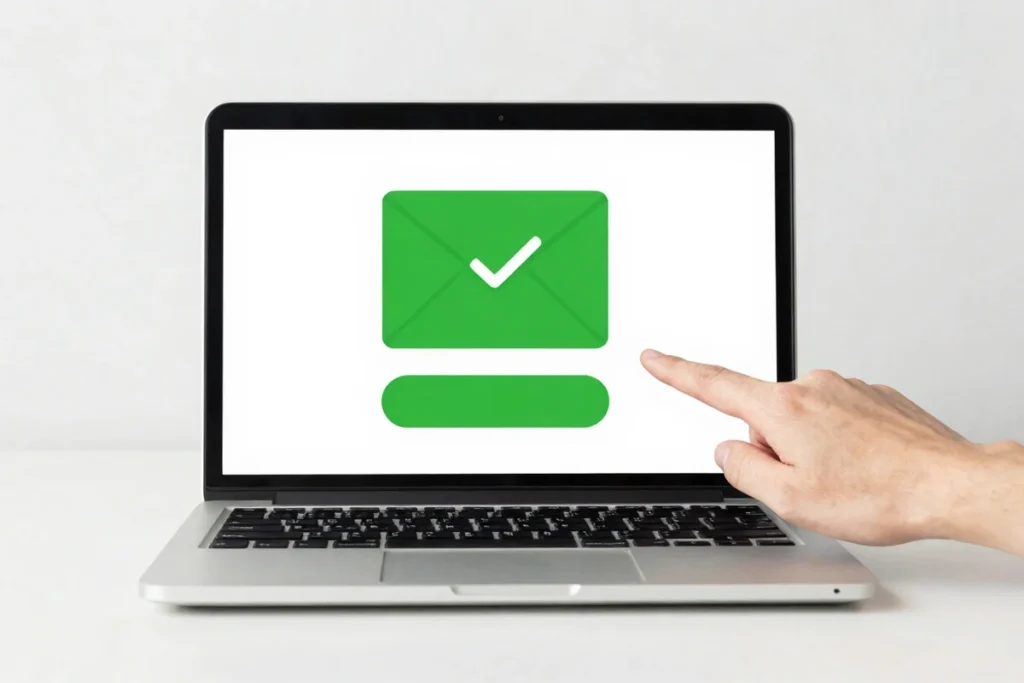
German courts expect advertisers to be able to prove consent. The standard method is double opt-in:
- The person enters their email address in a form with a clear explanation of what they’re signing up for.
- You send a confirmation email with no advertising content, containing a confirmation link.
- They click the link to confirm.
- You log the timestamp, IP address and consent text so you can prove it later.
Tips for consent forms:
- Don’t pre-tick checkboxes.
- Explain specifically what content they’ll receive and how often.
- Link to your privacy policy.
- Make unsubscribing as easy as subscribing.
B2B Cold Calling in Germany
Phone rules are slightly more flexible for businesses than for consumers:
- Consumers: Prior express consent is required for advertising calls, and violations can lead to significant fines.
- Businesses: Calls are allowed with at least presumed consent (mutmaßliche Einwilligung). That means there must be concrete facts suggesting the business would be interested in your specific offer.
Example: Calling a nursing home to offer a disinfection product relevant to its daily operations is more likely to be justified than calling a random company with a generic offer. Document why you believed the business would be interested.
Postal Mail: The Underrated Channel
Addressed postal advertising to businesses is generally permitted unless the recipient has objected. That makes it one of the most reliable first-contact channels in Germany:
- Send catalogs, product samples or a personalized introduction letter.
- Include a simple way to request more information, such as a QR code to an opt-in form.
- Respect objections and keep a suppression list.
Under the GDPR, you still need a lawful basis (often legitimate interest) and must provide data protection information.
Comparison: Outreach Channels in Germany
| Channel | First contact without consent? | Notes |
|---|---|---|
| Generally no | Needs prior express consent, except the narrow existing-customer exception | |
| B2B phone | Possible | Requires presumed interest; document your reasoning |
| Consumer phone | No | Prior express consent required |
| Postal mail | Generally yes | Respect objections; GDPR information duties apply |
| LinkedIn / Xing | Depends | Platform rules apply; personalized, relevant messages are safest |
| Trade fairs and events | Yes, in person | Great for collecting documented opt-ins |
What Happens If You Break the Rules?
- Warning letters (Abmahnungen): Competitors and qualified associations can send formal warning letters demanding you stop, often with a cease-and-desist declaration that carries contractual penalties for future breaches, plus legal costs.
- Injunctions: Recipients can seek court orders against you.
- GDPR enforcement: Data protection authorities can investigate and impose fines for unlawful processing of personal data.
- Deliverability damage: Spam complaints hurt your sender reputation and email domain.
A Compliant Outreach Plan for German B2B Markets
- Build a targeted list of companies or facilities in your segment, for example a Germany nursing homes and clinics database for market sizing and territory planning.
- Use postal mail for first contact with a clear, relevant offer.
- Follow up by phone where you can document a concrete interest.
- Invite responses to an opt-in form using double opt-in.
- Email only opted-in contacts and include an imprint (Impressum) and an unsubscribe link in every message.
- Keep records of consent, objections and your reasoning for B2B calls.
For an industry example, see our guide on how to sell medical supplies to nursing homes in Germany.
Frequently Asked Questions
Is B2B cold email legal in Germany?
Generally no. Under UWG §7, advertising emails require the recipient’s prior express consent, and this applies to businesses as well as consumers. The main exception is for existing customers under strict conditions.
Does sending to info@ addresses make cold email legal in Germany?
No. Generic addresses may fall outside the GDPR if they don’t identify a person, but UWG §7 still requires prior consent for advertising emails, regardless of the address type.
What is the existing-customer exception?
It allows email marketing without prior consent if you obtained the address during a sale, promote your own similar products, the customer hasn’t objected, and you clearly inform them of their right to object when collecting the address and in every email.
Is B2B cold calling allowed in Germany?
B2B advertising calls can be permitted with presumed consent, meaning there are concrete reasons to believe the business is interested in your specific offer. Calls to consumers require prior express consent.
Is double opt-in required in Germany?
It isn’t written into law as such, but it’s the standard way to prove consent and is widely expected by courts and authorities.
Can I send postal mail to German businesses without consent?
Generally yes, unless the recipient has objected. You still need a lawful basis under the GDPR for using personal data and must provide the required data protection information.
What is an Abmahnung?
A formal warning letter, usually from a competitor or an association, demanding that you stop an unlawful practice. It often includes legal fees and a cease-and-desist declaration with contractual penalties for future violations.
Final Thoughts
Germany rewards marketers who respect its rules. Treat email as a channel for people who’ve asked to hear from you, and use postal mail, relevant B2B calls, trade fairs and helpful content to start conversations. Combine accurate targeting with documented consent, and you’ll build a German pipeline that’s both effective and defensible.
Questions about building a compliant prospect list? Contact us or read our GDPR compliance page.