
Quick answer: To invest in crypto, (1) decide how much you can afford to lose, (2) pick a regulated exchange or a spot crypto ETF, (3) verify your identity and turn on two-factor authentication, (4) fund your account, (5) buy a well-established coin such as Bitcoin or Ethereum, (6) move larger holdings to a wallet you control, and (7) keep records for taxes. Most beginners do best investing small, fixed amounts on a regular schedule rather than trying to time the market.
Disclaimer: This guide is for education only and is not financial advice. Crypto is highly volatile and you can lose some or all of your money. Consider speaking with a licensed financial adviser about your own situation.
Key Takeaways
- Only invest money you can afford to lose. Crypto prices can drop 50% or more in a year.
- Beginners usually start with Bitcoin (BTC) and Ethereum (ETH), the two largest and most established cryptocurrencies.
- You can get exposure through a crypto exchange (you own the coins) or a spot crypto ETF in a regular brokerage account (you own fund shares).
- Dollar-cost averaging (buying a fixed amount on a schedule) reduces the stress of timing the market.
- Security matters as much as what you buy: use two-factor authentication, never share your seed phrase, and ignore anyone who “guarantees” returns. Learn the warning signs in our guide to crypto scams.
What Is Cryptocurrency? (In One Paragraph)
Cryptocurrency is digital money that runs on a blockchain, a public ledger maintained by a network of computers instead of a bank. Bitcoin, launched in 2009, was the first and is often described as “digital gold” because its supply is capped at 21 million coins. Ethereum is a programmable blockchain that powers applications such as decentralized finance (DeFi), stablecoins, and NFTs. Thousands of other tokens exist, but most are far riskier and less liquid.
Is Crypto a Good Investment in 2026?
Crypto can be a good investment for some people as a small part of a diversified portfolio, but it is not right for everyone.
Reasons people invest:
- Potential for high long-term growth
- Bitcoin’s fixed supply appeals to people worried about inflation
- Easier access than ever, including spot Bitcoin and Ethereum ETFs (approved in the US in 2024) and clearer rules in regions like the EU under MiCA
Reasons for caution:
- Extreme price swings
- No government deposit insurance on crypto holdings
- Scams, hacks, and failed platforms have cost investors billions
- Rules and taxes are still changing in many countries
Bottom line: Treat crypto as a high-risk, high-volatility asset. Many financial planners suggest beginners keep it to a small single-digit percentage of their total investments.
How to Invest in Crypto: 7 Steps for Beginners

Step 1: Set Your Budget and Goals
Before you buy anything, answer three questions:
- How much can I lose without it affecting my rent, bills, or emergency fund?
- How long do I plan to hold? (Crypto tends to suit people with a multi-year horizon.)
- Why am I investing? Long-term growth, learning, or diversification?
Make sure you have an emergency fund and no high-interest debt first. Paying off a credit card charging 20%+ interest is a guaranteed “return” that crypto cannot promise.
Step 2: Choose How You Want to Invest
| Option | What you own | Best for | Trade-offs |
|---|---|---|---|
| Crypto exchange (e.g., Coinbase, Kraken, Binance where licensed) | The actual coins | People who want to own, send, or use crypto | You manage account security; fees vary |
| Spot crypto ETF (via a regular brokerage) | Shares of a fund holding BTC or ETH | Hands-off investors, retirement accounts | Annual fund fee; can’t send or spend the coins |
| Crypto in a payment app (e.g., PayPal, Revolut, Cash App) | Coins, sometimes with limited withdrawal | Small, casual purchases | Often higher spreads; fewer features |
How to pick a platform:
- Is it licensed or registered in your country?
- Does it publish proof of reserves or audited financials?
- Are fees clearly listed (trading fee, spread, withdrawal fee)?
- Does it support two-factor authentication (2FA) with an authenticator app or hardware key?
- Can you withdraw to your own wallet?
Step 3: Create and Secure Your Account
- Sign up with an email you use only for finance accounts.
- Complete identity verification (KYC). Regulated platforms are required to do this.
- Turn on 2FA using an authenticator app or security key, not SMS if you can avoid it.
- Set up a withdrawal allowlist if the platform offers one, so funds can only go to addresses you approve.
Step 4: Fund Your Account
Most platforms accept bank transfers, debit cards, and sometimes wire transfers. Bank transfers are usually the cheapest; card purchases often carry fees of several percent. Check minimums and processing times before you deposit.
Step 5: Decide What to Buy
For most beginners, a simple approach works:
- Bitcoin (BTC): The largest and most widely held cryptocurrency.
- Ethereum (ETH): The leading smart-contract platform.
- Small speculative positions (optional): If you want to explore other tokens, keep them to a small slice and research them first.
Before buying any coin, check:
- What problem does it solve, and who uses it?
- Market capitalization and daily trading volume
- Token supply and upcoming unlocks
- Whether the team and code are public and audited
Avoid coins promoted mainly through hype, celebrity endorsements, or “100x” promises.
Step 6: Place Your First Order
- Market order: Buys immediately at the current price. Simple, but you may pay a wider spread.
- Limit order: Buys only at the price you set or better. Often lower fees.
- Recurring buy: Automatically purchases a fixed amount weekly or monthly. This is dollar-cost averaging (DCA).
Example of DCA: Instead of investing $1,200 at once, you invest $100 on the 1st of every month for a year. Some months you buy high, some months low, and your average price smooths out.
Step 7: Store Your Crypto Safely
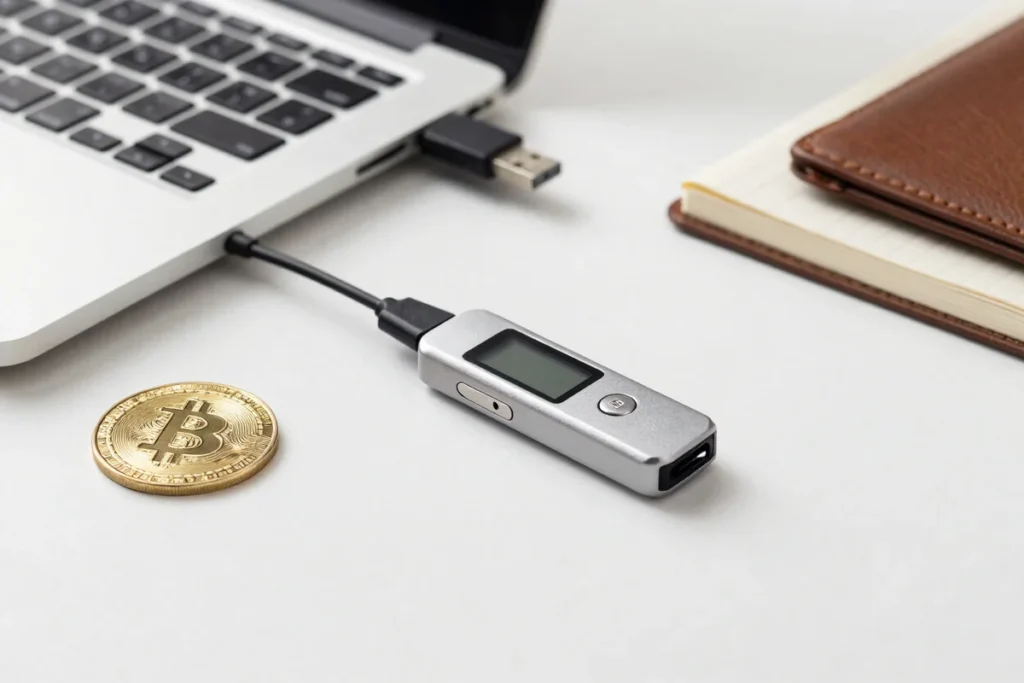
| Wallet type | Description | Security | Convenience |
|---|---|---|---|
| Exchange (custodial) | The platform holds your keys | Depends on the platform | Very easy |
| Software (hot) wallet | App on your phone or browser | Good for small amounts | Easy |
| Hardware (cold) wallet | Physical device that stores keys offline | Strongest for long-term holdings | Less convenient |
The golden rule: Your seed phrase (12–24 words) is the master key to your wallet. Write it on paper or metal, store it offline, and never type it into a website or share it with anyone, including “support staff.” No legitimate company will ever ask for it, and anyone who does is running one of the most common crypto scams.
How Much Should a Beginner Invest in Crypto?
There is no single right number, but common guidelines include:
- Start with an amount you’d be comfortable seeing fall by half.
- Keep crypto to a small percentage of your total portfolio.
- Add gradually through dollar-cost averaging instead of investing a lump sum all at once.
If a sharp price drop would make you panic-sell, your position is probably too large.
Common Crypto Mistakes Beginners Should Avoid
- Investing money you need soon. Short-term crashes are common.
- Chasing hype. Buying after a coin has already surged often means buying near the top.
- Using leverage or futures. Borrowed money can wipe out your position quickly.
- Ignoring fees. Spreads and card fees add up.
- Leaving large amounts on unregulated platforms.
- Falling for scams (see how to spot crypto scams).
- Forgetting about taxes. See do you pay taxes on crypto.
How to Spot Crypto Scams
Red flags include:
- Guaranteed returns or “risk-free” profits
- Someone you met online (dating apps, social media, WhatsApp, Telegram) who pushes you toward a specific platform
- Requests for your seed phrase or private key
- “Recovery services” that promise to get back stolen crypto for an upfront fee
- Fake giveaways: “Send 1 ETH, get 2 back”
- Pressure to act fast
If something sounds too good to be true, it is. Report scams to your national consumer protection or cybercrime agency. For the full list of scam types and what to do if you’ve been targeted, read Crypto Scams in 2026: How to Spot Them and Protect Your Wallet.
Do You Pay Taxes on Crypto?
In most countries, yes. Typically:
- Selling crypto for cash, trading one coin for another, or spending crypto can trigger capital gains tax.
- Staking rewards, mining income, and airdrops may be taxed as income.
- Simply buying and holding usually isn’t taxable until you sell or swap.
Rules differ by country, so keep records of every transaction (date, amount, price, fees) and consider crypto tax software or a tax professional.
Frequently Asked Questions
What is the easiest way to invest in crypto?
The easiest way is to buy Bitcoin or Ethereum through a regulated exchange or app, or to buy a spot crypto ETF in a regular brokerage account. Setting up a small recurring purchase is the simplest hands-off approach.
Can I invest in crypto with $100?
Yes. Most exchanges let you buy fractions of a coin, so you can start with $10–$100. Watch out for flat fees, which take a bigger percentage of small purchases.
Is Bitcoin or Ethereum better for beginners?
Both are commonly chosen by beginners. Bitcoin is generally seen as a store of value, while Ethereum powers apps and smart contracts. Many beginners hold some of each.
Is it safe to keep crypto on an exchange?
It can be reasonably safe on a well-regulated exchange with strong security, but you are trusting the company. For larger long-term holdings, many investors use a hardware wallet.
What is dollar-cost averaging in crypto?
Dollar-cost averaging means investing a fixed amount at regular intervals, such as $50 every week, regardless of price. It reduces the risk of investing everything at a market peak.
How long should I hold crypto?
Many investors hold for several years because short-term prices are unpredictable. Your holding period should match your goals and risk tolerance.
Can you lose all your money in crypto?
Yes. Prices can fall sharply, projects can fail, and platforms can be hacked or go bankrupt. Only invest what you can afford to lose.
Final Thoughts
Investing in crypto in 2026 is easier than ever, but the basics haven’t changed: start small, stick to established assets, secure your accounts, invest regularly, and keep good records. Treat crypto as one high-risk piece of a broader financial plan, not a get-rich-quick shortcut. For more practical guides, browse our blog.
Want weekly, plain-English crypto market updates? Subscribe to our free newsletter and get our beginner checklist when you sign up. Unsubscribe anytime.